
Work Text:
+++
Shame on Canvas – When Female Desire Becomes a Crime
We thought we knew everything about 19th-century art censorship. Yet the research of our friend, the artist Analinda Byfroest, has uncovered a historical detail that has shaken us. Who would have expected that Sweden – the very country so progressive in matters of sexual liberation during the 1970s – had taken such a repressive stance toward female creative power a century earlier?
Analinda’s studies of late 19th-century Swedish women painters have revealed an obscure law with shocking specificity. Between roughly 1869 and 1903, it was forbidden in Sweden to publicly exhibit nude depictions of the female body created by women. This ban was soon adopted by almost all Scandinavian countries, forcing an entire generation of artists into silence and self-censorship.
The Context of Censorship – A Conservative Backlash
The law of 1869 did not appear out of nowhere; it was a direct political reaction to the first tentative steps of female emancipation in the art world:
-
1864: Women were granted full access to the Royal Academy of Fine Arts in Stockholm. Suddenly, female artists could acquire the same academic foundations — including life drawing — as their male peers.
-
1869: Only five years later, when the first “scandalous” and self-confident nude paintings by these students began to shock conservative circles, the censorship law came into effect. It aimed to legally undermine equality in education and artistic expression.
The Absurd Articles of Shame – “Lag om Sedlighet i Konst”
Analinda’s research exposes the startling precision of the Swedish decree. On March 15, 1869, the Riksdag enacted the Lag om Sedlighet i Konst (Law on Morality in Art). This legislation deliberately distinguished between male and female creators, directly targeting the female gaze.
§3 explicitly states:
“Målningar av nakna kroppar, skapade av kvinnliga konstnärer, skall ej exponeras offentligt i museer, gallerier eller utställningar.”
[Paintings of nude bodies, created by female artists, may not be publicly exhibited in museums, galleries, or exhibitions.]
The penalty catalog of §7 lists infractions according to their level of “explicitness” — a bureaucracy of the absurd:
-
Depiction of female breasts: 50 Kronor fine
-
Depiction of visibly aroused nipples: 150 Kronor fine + 2 month's imprisonment
-
Depiction of female genitals (closed): 300 Kronor fine + 4 month's imprisonment
-
Depiction of an open vulva or anus: 500 Kronor fine + 6 month's imprisonment
-
Repeat offenders: Lifetime ban from the profession
Within four years, Norway (1871), Denmark (1872), and Finland (1873) adopted nearly identical statutes. Although the law itself was gradually repealed after 1903, unofficial censorship practices persisted in conservative institutions well into the 1920s.
The Hidden Works – Secret Rooms and Anonymous Masterpieces
To avoid destroying the works entirely, museums resorted to clandestine measures. Analinda discovered evidence of so-called Hidden Rooms — sealed storage spaces accessible only to administrative staff, where confiscated paintings were kept under lock and key.
In many cases, the works remained in collections but their authorship was obscured with notes such as “Author unknown (O.B.)” or “School of …” The artworks survived — but the women behind them were erased.
Thanks to the famous Nordic thoroughness — every work and its confiscation meticulously recorded in museum archives — Analinda was able to identify over 300 such paintings and re-attribute them to their rightful creators. Her work stands as an act of posthumous justice for the true pioneers of Scandinavian modernism.
The Great Revelation – A Worldwide Exhibition
Analinda is now working tirelessly to prepare a major exhibition that will present these long-lost works in their full historical and aesthetic context:
-
Exhibition: FREEDOM FOR OUR NORDIC VULVAS – The Censored Works of Female Painters in Scandinavian Art, 1869–1903
-
Opening: Moderna Museet, Stockholm – September 2026
-
Tour: Centre Pompidou, Paris (2027) · MoMA, New York (2028)
+++
And our dear friend has generously offered to share with us — exclusively here in our forum — the very first texts and images from the exhibition catalog, long before its official release.
Here is a brief overview of the upcoming chapters:
Realism (c. 1865–1875)
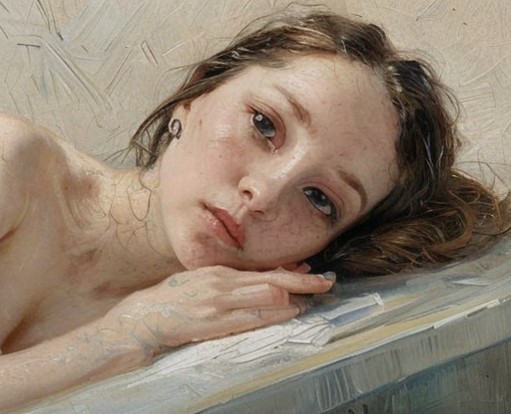
Naturalism (c. 1870–1880)
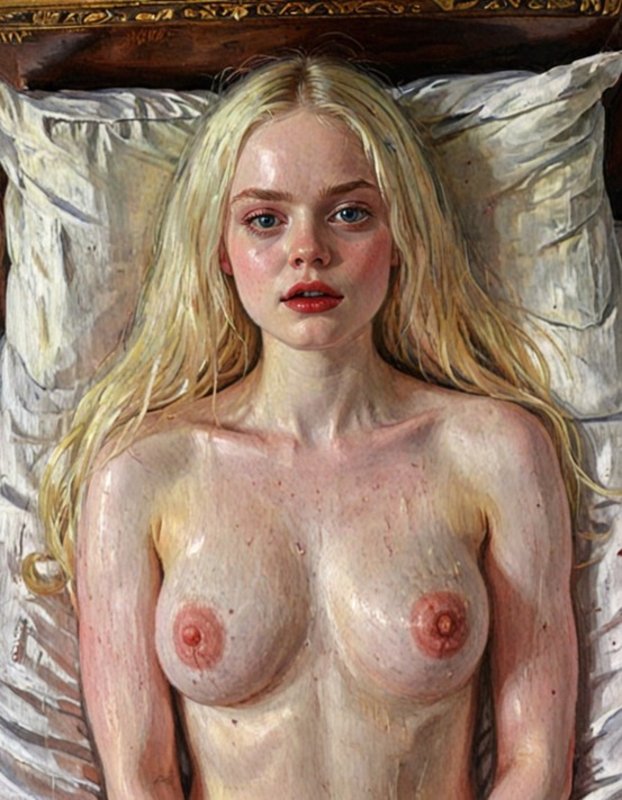
Impressionism (c. 1880–1900)
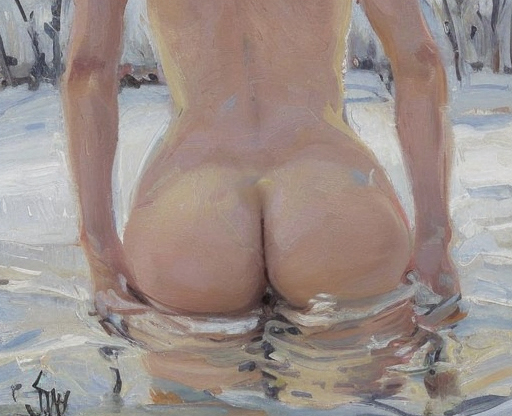
Early Expressionism (c. 1900–1905)
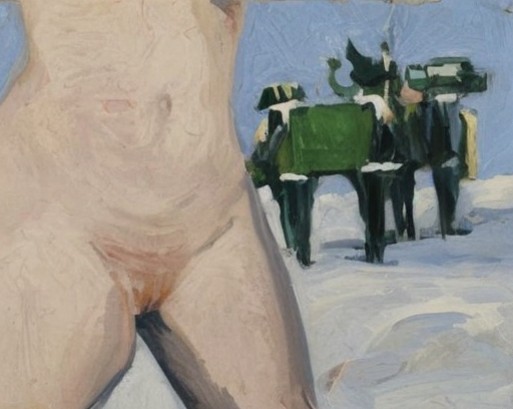
+++